The oldest Norwegian drum music — explained so you actually understand it
You don't need to read music, and you don't need any prior playing experience. Join cultural educator Lage Thune Myrberget in exploring Norwegian drum-tune tradition — with Åsmund Soldal as the living example of how the heritage is carried forward.
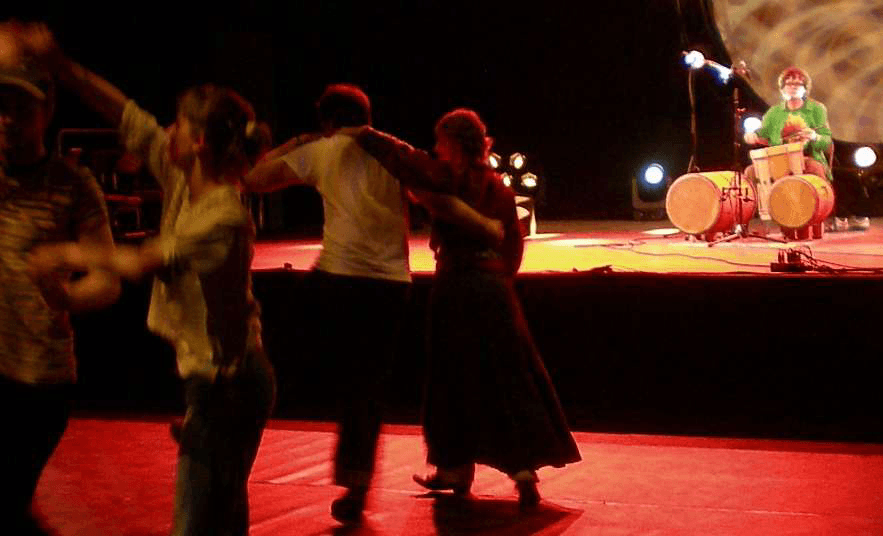
“I want to show you how living cultural heritage is actually created — not as something distant behind glass, but as something you can do yourself. Åsmund is my example: see what he did, then we try it together.”
It began with a conversation
Lage Thune Myrberget met Åsmund Soldal for a chat about Norwegian drum-tune tradition — about tradition as something living, without gatekeepers. Out of that conversation grew a shared wish: to take the heritage down off the shelf and make it accessible to everyone who wants to learn.
This page — and the courses to come — are the first step. Hear the whole conversation here:
So what exactly is a trommeslått?
Picture a melody — but played on a single drum, with no pitches. The rhythm is the melody. The tunes were played at Norwegian weddings for hundreds of years: to wake the guests, call them to the table, and accompany the bridal procession to and from church.
Drumming in European armies can be traced back to 14th-century Switzerland — the signals spread northward.
When the tambours came home from service, they kept playing in civilian life. The signals were “spun onward” — and became tunes.
The tunes are still played — and in 2026 got their own class at the Landskappleik folk-music championship for the first time.
Hear 88 years melt together
This is how you learn a slått: you listen, and you play it back. Here's the same tune — first as Johannes Sundvor played it for NRK in 1937, then as Åsmund plays it today. Hear how it lives on.
The keys — a slått's smallest parts
A slått is built up of small, recognizable rhythmic patterns. Åsmund calls them keys (others call them rudiments). Learn the keys, and you can build — and eventually spin onward yourself. Press a key:
Ett slag med høyre, ett med venstre — vekselvis. Grunnmuren i alt. Høyre-venstre-høyre-venstre.
One family kept the tradition alive
Without the Sundvor family, Norway would likely have no preserved drum-tune tradition at all. The tunes were passed from father to son across three generations — what Åsmund calls a tradition tree.
Tambour, police officer and folk-music collector. Left behind 32 audio recordings and roughly 400 written-down tunes.
Johannes's son. Carried the tradition on to the next generation.
The grandson. Wrote about buekorps drum marches and was a unique communicator of the tradition.
Add · take away · swap
Once you know the craft, the room to play opens up. Åsmund's idea for spinning a slått onward — with respect for the tradition — is to do one of three things with a pattern. Try it:
Utgangspunktet — mønsteret slik det står i noten. Lær dette først; det er «spillereglene».
Six modules, from zero to your first slått
This is how it's planned. This pilot shows the structure and the teaching approach — the technical video courses will be recorded later and published on noeforalle.no.
Historien, bryllupsslåttene og hvorfor tromma teller. Lett fortalt, ingen forkunnskap.
Hvordan holde stikkene, og de aller første byggeklossene — med lyd.
Lær «Mehuskvervelen» etter gehør, steg for steg mot opptaket.
Broa til norsk folkemusikk — takt, dans og forskjellen på slått og marsj.
Legg til, trekk fra, bytt om. Lag din egen variant innafor tradisjonen.
Slik tar Åsmund slåttene over på trommesett — kunstnerisk utforsking.
- Listen to the whole tune twice. Don't think — just listen.
- Clap the pulse while you hear it a third time.
- Learn the first key: the kvervel. Play it slowly, over and over.
- Add the second key. Put them together.
- Play along with the recording until you're in sync.
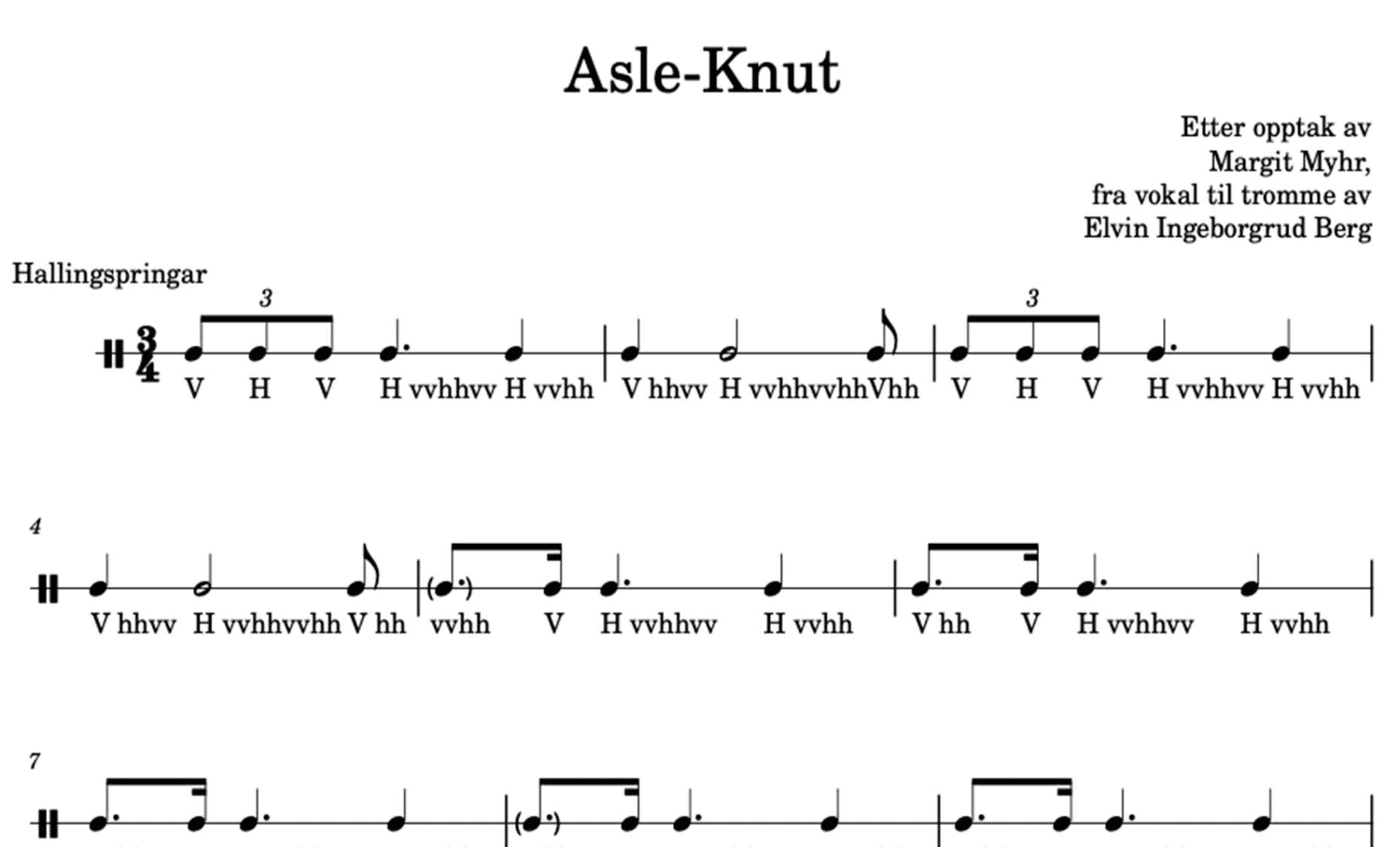
The technical video courses are coming to noeforalle.no
This page is a pilot — a presentation of the work. The full courses, with their own films, are being recorded and will be published on Noe for alle.