When Drums Sing: The Art of Improvising Something Entirely New
Imagine three musicians who meet without sheet music, without an agreed-upon melody, without a plan for where the music will end. They start playing – and still create something that holds together, something whole. It sounds almost paradoxical, but this is exactly what Hans-Kristian Kjos Sørensen, Arve Henriksen and Christian Wallumrød set out to do when they began their collaboration in the mid-1990s. The story of the trio is drawn from the Slagverknytt archive, where Even Finsrud discussed the project under the heading «Improvisert samtidsmusikk» (Improvised contemporary music). It deserves to be read anew, for the thinking behind it is perhaps even more relevant today.
What makes the project exciting is the ambition of a «totalimprovisert og helhetlig uttrykk med preferanser i samtidsmusikk og jazz» (fully improvised and coherent expression with leanings towards contemporary music and jazz), as Finsrud put it. Note the two words that meet: fully improvised and coherent. Improvisation is often associated with the spontaneous, the unpredictable, perhaps even the accidental. But this was not about chaos. The goal was something that held together, that had form and direction, even though no one knew in advance how it would sound. That requires a very special kind of listening: you must hear what the others are doing in the very same moment as you shape your own voice, and constantly adjust the course together.
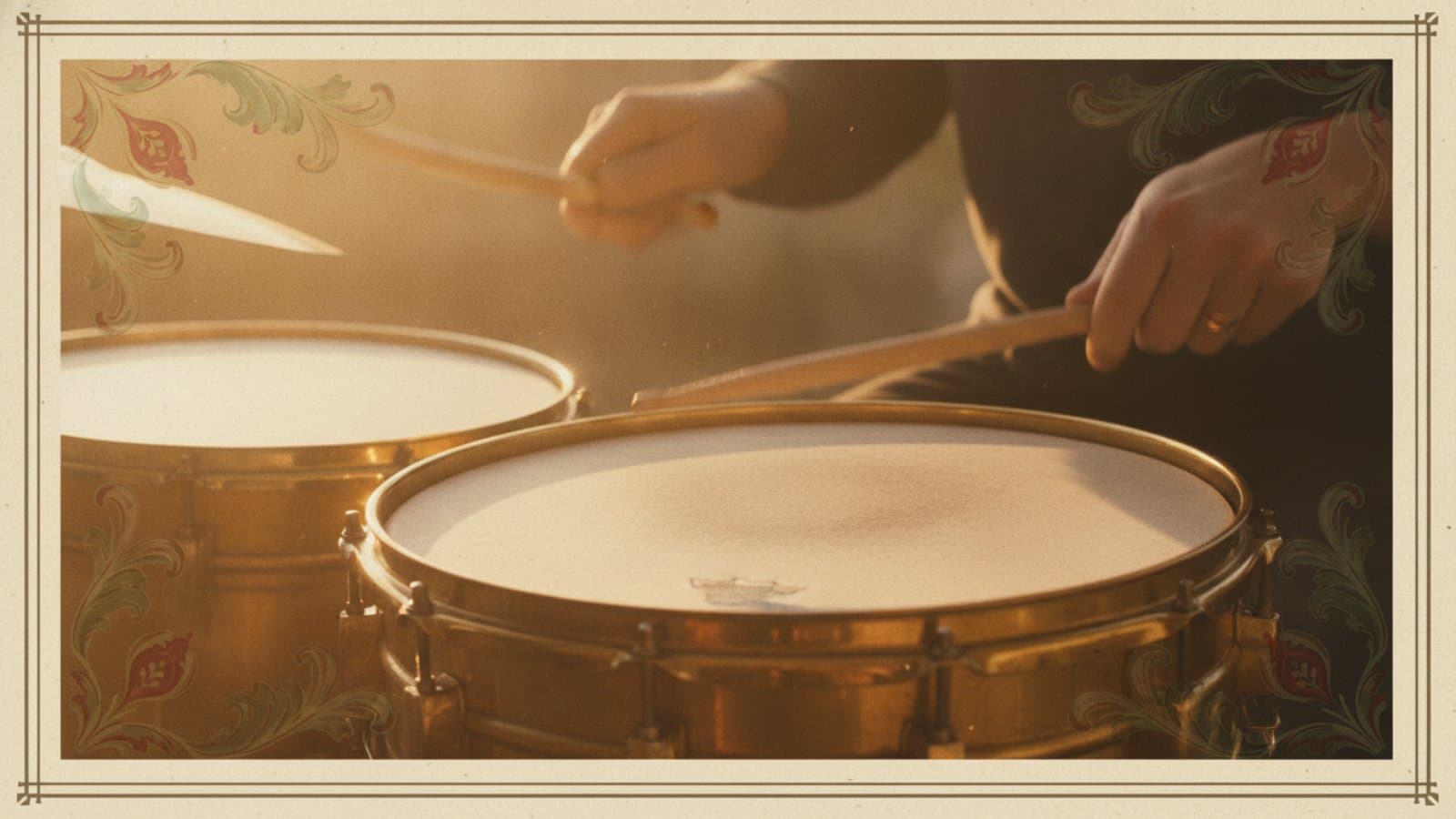
The most thought-provoking thing for those of us concerned with percussion is the choice Kjos Sørensen made. In this trio he would not play a drum kit, but melodic percussion. It is a small but decisive signal. The percussionist was not merely to be the one who kept the pulse and drove the music forward – he was to sing along, to contribute notes and melody on equal terms with trumpet and piano. For many, drums are still synonymous with rhythm and accompaniment. Here the instrument was brought forward as a melodic voice, an equal conversation partner. It is an attitude worth carrying with us: percussion is not just something that lies underneath, it can just as well carry.
The backgrounds of the three also tell us something about why this was possible. Henriksen and Wallumrød came from the jazz programme at Trøndelag musikkonservatorium and had experience from a range of ensembles and commissioned works for festivals such as Vossajazz and Kongsberg Jazzfestival. Kjos Sørensen had a solid classical training, including studies in France where he won a «énstemmig førstepris med utmerkelse» (unanimous first prize with distinction), and he had been solo percussionist in major symphony orchestras. Three very different paths, three different traditions – meeting in something shared. It is precisely at such crossing points that much innovation arises. None of them abandoned their own background; they used it to create something they could not have made on their own.
According to Finsrud, the trio had already «høstet lovord for sine opptredener» (earned praise for their performances), and in November they were to enter Rainbow studio to record their first album. Bringing fully improvised music into a studio is itself an interesting exercise: how do you capture a moment that, by definition, cannot be repeated?
For today's readers the point is this: you do not need to wait for everything to be fully planned before you dare to create. Listen, take risks, build on what the others give you – and dare to let the drums sing. If you want to know more about how all of this began, we recommend seeking out the original article in the Slagverknytt archive and reading Finsrud's report in full.