The Man Who Saved the Drum Tunes
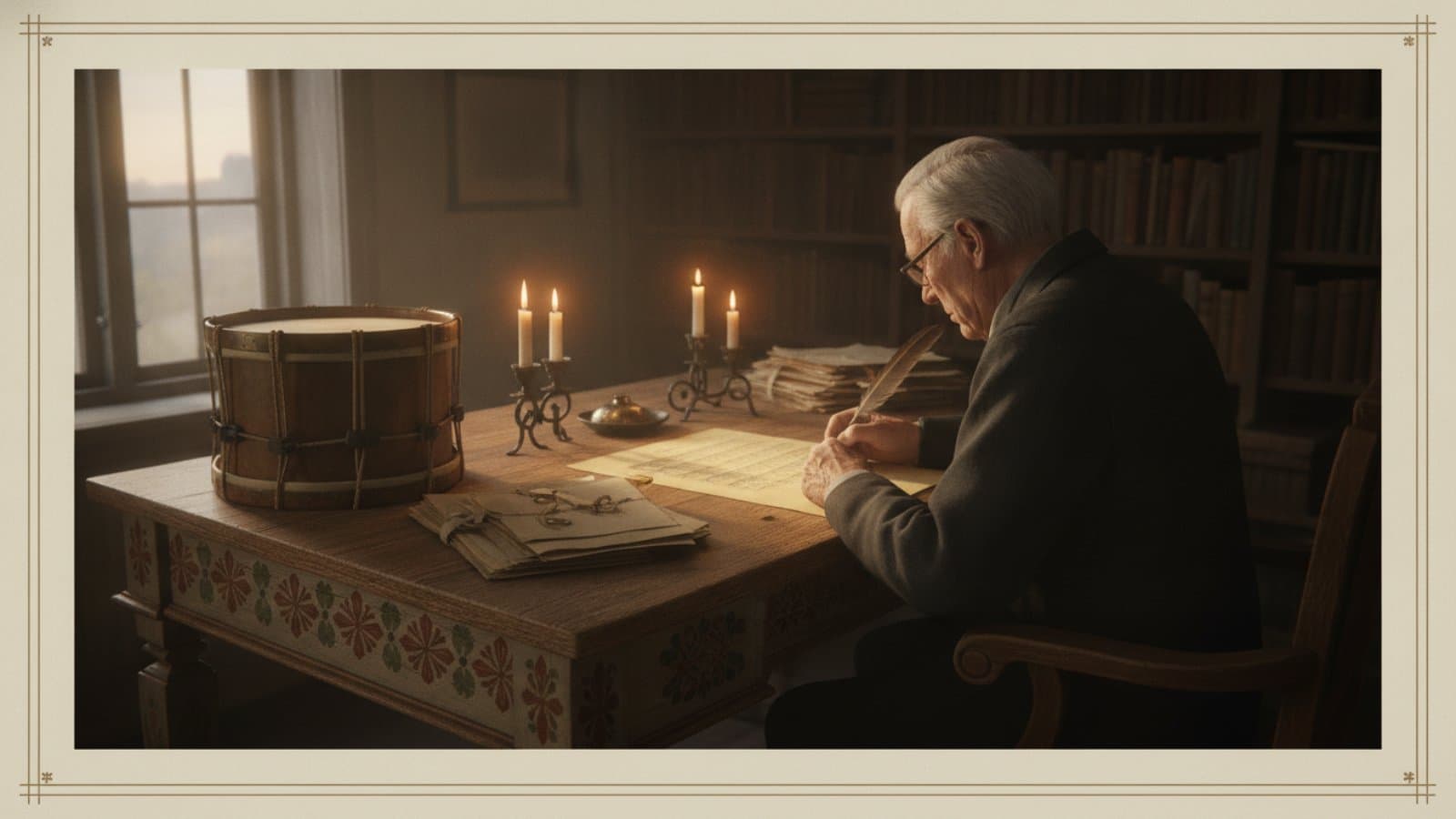
He was just a teenager with a summer job at a fish-processing plant in western Norway when the foundation was laid for a life's work. Between shifts spent handling brisling, Johannes Sundvor (1871–1941) received his first drum instruction from two men who had served as compagnitamburer (company drummers). "Når brislingen ikkje var å finna, hende det trumba kom fram" ("When there was no brisling to be found, the drum would sometimes come out"), wrote Jon Teigland in his 1951 portrait, adding that the boy swung the drumsticks "so taktfast og greidt at gubbane laut undra seg" ("so steadily and skilfully that the old men couldn't help but marvel").
From this humble beginning grew a collector and preserver without equal in the history of Norwegian drumming. In 1891, at the age of twenty, Sundvor learned Bryllupsslått from Hålandsdalen from tambur (drummer) Stein Johannesson Sælsvoll — a trommeslått (drum tune) still played at tambur evenings all across the country. But Sundvor's real achievement came in the years 1915 to 1937, when he wrote down and collected an entire tradition of trommeslåttar (drum tunes) that might otherwise have been lost. The tunes rest heavily on European military drumming, with roots reaching all the way back to the centuries-old drummers' guild "Basler Trommler-Gilden" in Switzerland.
Sundvor was not only a collector. He composed new tunes himself, such as "Polka Mazurka", "Reinlendaren" and "Vals-revelje", and he wrote about the drum in the context of weddings in the article "Tromba" from 1931. He knew the folk music collector Arne Bjørndal well; an old photograph shows them together at a wedding — Bjørndal with a hardanger fiddle, Sundvor with a drum.
Today the trommeslåttar are part of the curriculum in municipal schools of the arts, upper secondary schools and higher music education. That they exist at all is thanks to a boy who drummed between the crates of brisling.
📺Watch on NRK TVOpen on nrk.no ↗