The Drum, Piece by Piece: Lincke's Notes
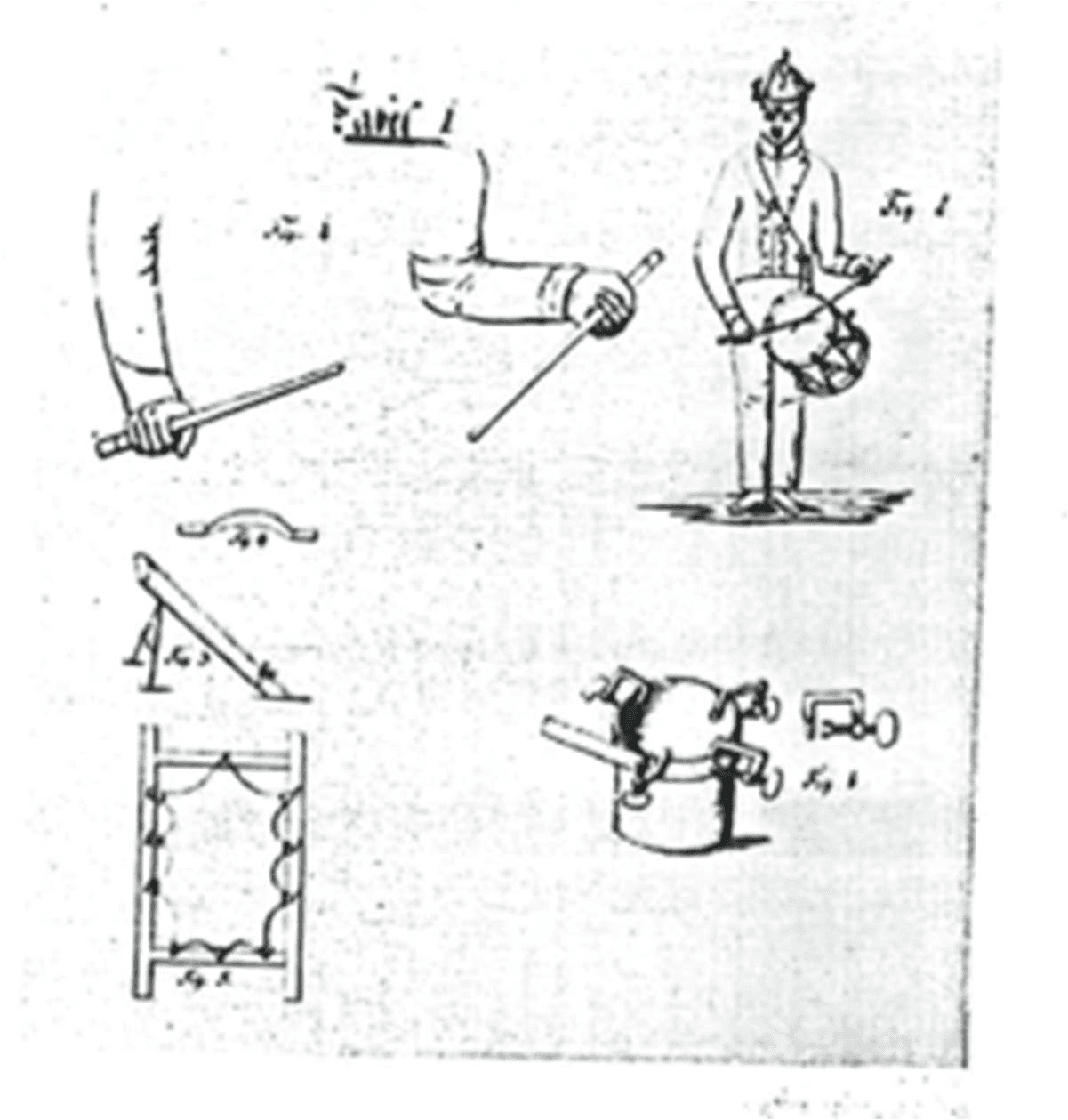
In the 1820s, regimental drummer Johan Hendrich Lincke (1794–1843) wrote down the duties of the tambur (military drummer) — because the old oral instruction was no longer sufficient. In this final part, he turns to the drum itself: its six parts, and how the tambur is to maintain and repair it himself "i paakommende Tilfælde" ("in cases that may arise").
Lincke proceeds methodically: the drum consists of six parts — shell, skin, hoops, rope, snares and screw with adjustment ring. A calfskin is soaked for 24 hours, tanned over a trestle, stretched in a frame and polished with pumice stone until it can be "oppbevares i Aar og Dag" ("kept for years on end"). The snares are made from 50 lamb intestines, rubbed with garlic and sulphur so they rattle better against the lower skin.
When the regiment is on the march, alternating rain and sunshine wear on the skin. How important is the tambur then — and that he himself can maintain his instrument?
The text offers a rare insight: a "complete" tambur had to master the administrative, the pedagogical and the practical. Behind it all lay a mentality — a tambur who could function both in camp and in the field.